

No matter how fast the pace of digital transformation accelerates, the most critical component of the technology world remains the human element. On one side, we have IT professionals fighting an “invisible war” to ensure system continuity; on the other, we have users whose work depends entirely on these systems and who expect immediate solutions when things go wrong.
IT (Information Technology) support is not merely a “break-fix” process. It is, in fact, a form of crisis management, an art of communication, and most importantly, a profound test of empathy. In this guide, we strip away the technical jargon to take a deep dive into the worlds of the people sitting on both sides of the desk.
1. We Don’t Just Close “Tickets”: Risk and Future Management
For an IT support specialist, every new ticket might look like a technical puzzle waiting to be solved. However, the true picture behind that request is much larger than a single error code.
The Professional Perspective: High-quality support is not just about fixing what is broken (reactive). The real value-add lies in a proactive approach that asks, “Why did this happen, and how can we prevent it from ever happening again?”
The Strategic Layer: A server update or database optimization might seem invisible to the user at that moment. Yet, these “unseen” tasks are the strongest shield preventing a company from waking up to total operational paralysis. When support personnel view themselves as “architects” rather than just “firefighters,” the quality of service reaches a whole new level.
2. Jargon Detox: The Power of Speaking the Same Language
The IT world can often feel like an “alphabet soup” of acronyms: SLA, RFC, GUI, Kernel, Latency… While these terms are part of our professional expertise, to the person receiving support, they are often just confusing noise. Using this language unconsciously during the support process doesn’t speed up the solution; instead, it alienates the other party.
The Communication Bridge: A user doesn’t care about the technical name of a system deadlock. They are the person who might have to answer to their manager because they couldn’t issue an invoice during the month-end closing. A successful support professional translates technical complexity like this: “There is a transaction conflict in SAP blocking other users’ entries. We are currently identifying the source and expect to return to normal flow within 15 minutes.”
Building Trust: People fear what they do not understand. When you make the technical process transparent and understandable, you lift the “burden of uncertainty” off the other person’s shoulders.
3. Invisible Fires and the Labyrinth of Prioritization
From a user’s perspective, the most pressing issue at any given moment is the error on their own screen. However, behind the scenes at the Help Desk, the situation is far more complex.
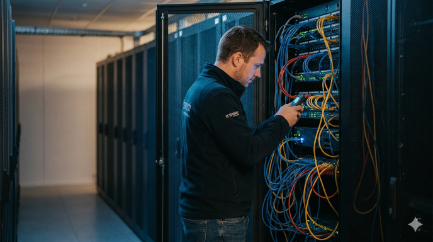
Empathy for the User: If an IT specialist doesn’t return to your request immediately, it doesn’t mean they don’t care. At that moment, they are likely dealing with a “fire”—perhaps a cyberattack impacting the entire company’s internet access or the failure of a central data storage unit.
Furthermore, empathy is a shared responsibility between the service recipient and the provider. Technical excellence that fails to understand the user’s work pressure remains incomplete.
The Art of Hierarchy: When managing resources, IT personnel must prioritize the “greatest threat to business continuity” rather than the “loudest voice.” This prioritization is not a personal preference but an operational necessity.
4. Emotional Resilience in Times of Crisis: Panic Management
System outages are inherently high-tension moments. When a factory’s production line stops or a logistics center cannot ship orders, the environment resembles a cockpit during an emergency.
The Captain Pilot Effect: In a panic, passengers (users) look to the “captain.” An IT support specialist makes a difference not just with technical skills but with emotional resilience. Calmly stating, “We have identified the situation, we are implementing these steps, and we expect a result within this estimated time,” is half of the technical solution.
Reducing Tension: It must be remembered that IT support is the art of managing the stress of the people trying to get work done through those servers, not just managing the servers themselves.
5. IT Personnel Are Not Magicians
Technology can sometimes be unpredictable and capricious. Some errors are not the “fix-it-with-a-push-of-a-button” type; they require in-depth research (troubleshooting), log analysis, and a trial-and-error process.
Respect for the Process: Much like a surgical procedure, some technical interventions require time and focus. Constant pressure from a user asking “Is it done yet? When will it be finished?” does not speed up the process; instead, it creates stress that increases the margin of error for the specialist.
Support and Clarity: Patience is the greatest support you can offer IT personnel during this process. Conversely, patience becomes much easier for the user when the IT worker provides clear, transparent updates about the progress.
6. The Paradox of Being “Invisible”
IT departments are generally only noticed when something breaks. The “comfortable silence” provided when everything is running smoothly is often taken for granted.
Silent Heroism: If your system is working flawlessly today, it is not a coincidence. It is the result of a team working tirelessly behind the scenes—performing midnight updates, repelling cyberattacks, clearing disk space, and checking backups.
A Culture of Appreciation: A sincere “Thank you, I was able to finish my work because of your help” message sent after a problem is solved is the strongest fuel for an IT worker. It increases their motivation and their dedication for the next crisis.

Further Reading
Explore our article to gain deep insights into the motivational dynamics of tech professionals that go beyond salary!

7. Remembering the Human Behind the Screen
Dealing solely with problems, complaints, and error messages all day is mentally exhausting. At the end of the day, IT professionals are not just “solution machines”; they are human beings with emotions and varying levels of fatigue.
Mutual Courtesy: A harsh tone or an accusatory approach does not solve a technical problem any faster. On the contrary, it triggers the support team’s defensive mechanisms and breaks down communication. A request that begins with a simple “Hello” or “Hope you’re having a good day” is always met with more positive energy and engagement.
8. Managing Expectations: The Integrity of Saying “No”
It may not always be technically or strategically possible to fulfill every request immediately, especially when security is at stake.
Acting as a Guide: A high-level support specialist doesn’t just say “I can’t do it”; they explain why it cannot be done and offer a secure alternative. Honesty and expectation management are the foundations of a long-term business partnership and secure system management. Professionalism means providing a realistic timeline instead of making empty promises like “we’ll get it done” when it’s not feasible.
9. Next-Gen Support: Gen Z and Shifting Expectations
The new generation of employees entering the workforce today grew up with technology. However, this doesn’t mean they find every system intuitive—especially when it comes to complex enterprise platforms like SAP, where a lack of experience can quickly turn into frustration.
Different Demands: This generation’s support expectations are distinct. They prefer instant messaging over waiting on the phone, and self-service portals over long email chains. While their tolerance for waiting is lower, their appreciation for transparency is high—knowing when a problem will be solved is often as important to them as the solution itself.
Adaptation for Managed Services: For managed service providers, this is a matter of adaptation. Chat channels, self-service portals, and automated status updates are no longer “nice to have”; they are essential components of modern support.
The Human Connection: Regardless of the tool used, one thing remains constant: the feeling behind the need for help. Even on a digital channel, a tone that reminds the user there is a real person on the other side is the most powerful tool for building trust with Gen Z.
10. Avoiding Assumptions: The Silent Friction of Mental Scripts
In the support process, it is often not the systems that break first, but the relationships. Frequently, the cause is not a technical error but the assumptions we build in our minds. When parties start “reading intentions,” professionalism is often replaced by personal resentment.
Mental Traps: A user might think, “I’m not a priority,” during a delayed response. Meanwhile, an IT specialist might feel, “This is just another unnecessary panic,” when faced with a flurry of messages. In reality, most tension arises not from bad intentions, but from the “invisible pressures” each side faces.
The Empathy Bridge: While a user is struggling with a looming deadline, the IT professional might be trying to manage five different critical errors simultaneously. Professional maturity means trying to understand the situation instead of guessing the other party’s intent. Using transparent phrases like, “I know you’re busy, but this is critical for us,” or “I understand the urgency; we are currently at this stage of the solution,” allows you to manage the situation together rather than falling into the trap of assumptions.

11. The Power of First Contact: Setting the Tone for the Crisis
A technical solution may take hours to complete; however, how peacefully that process unfolds is often determined within the first few sentences. That “first contact” moment—whether a phone call is answered or a message is typed—either escalates the tension or builds a foundation of trust.
Defensive Reflex vs. Collaboration: When a user laments, “This system keeps giving errors!” and the IT side responds with, “Everything looks fine on our end,” it triggers a defensive reflex rather than a solution.
The Trust Threshold: A successful support culture invests not just in the speed of the solution, but in these initial seconds. Saying, “Let’s check the issue together,” may not change the technical reality, but it creates a sense of “I am not alone” for the user. Crises often become insurmountable not because of technical reasons, but because of communication that started with the wrong tone.
12. Managing Uncertainty: Understanding the Need for Control
When a system outage occurs, the user doesn’t just lose the ability to work; they lose their “sense of control.” By nature, any situation we cannot control creates significant anxiety.
Information as an Anchor: In these moments, a user’s constant requests for updates are not meant to harass the IT team; they are an attempt to regain that lost sense of control. The IT team, however, can become so focused on the fix that they cut off communication entirely. Yet, what is often sought is not an instant fix, but the “reduction of uncertainty.”
Transparent Communication: Small but clear updates like, “We have narrowed down the source of the problem; we are at this stage,” dissipate uncertainty and lower the tension. As trust grows, so does patience. It must be remembered that a high-quality support process is as much an art of uncertainty management as it is a technical operation.
13. Support in the SAP Ecosystem: The Anatomy of Invisible Pressures
Technical support within an SAP environment operates under a different kind of pressure than general IT processes. This is because disruptions here don’t just freeze a screen; they directly impact purchase orders, production plans, financial closings, and the entire supply chain.
An accounting team unable to access the FI module during a month-end closing, or an authorization error in the MM module during a year-end inventory count—these are not “system issues” to the user; they are business crises. Similarly, a Basis activity affecting dozens of users simultaneously or an unexpected compatibility error following a Transport move—these are not just technical puzzles for the support team; they are operational pressures requiring split-second prioritization.
In a Managed Services model, this tension is even more pronounced. The support team must maintain business continuity while working remotely, while the user, waiting for a solution on-site, cannot physically see anyone across from them. In this context, technical competence is mandatory, but it must be completed by a level of communication maturity that understands the invisible pressures on both sides.
14. A Practical Compass: For Both Sides of the Screen
For the IT Support Team:
Always give an estimated time during the first contact. Even if you don’t know for sure, say, “I will get back to you within 30 minutes”—and then follow through. Manage the person waiting for you, not just the uncertainty.
Translate the technical summary into the user’s language upon completion. Saying, “Your authorization profile in SAP was missing a definition; it’s updated, and you can enter now,” is far more valuable than a long, jargon-heavy ticket note.
Know the critical periods in advance. Mark month-end closings, period-endings, and inventory counts on your calendar. Reaching out proactively to say, “We know you’ll be busy this week; we are closely monitoring the systems,” is much more powerful than saying, “Look, we fixed it,” after a crisis hits.
For Users:
Provide context when opening a request. “What transaction were you performing? What error message did you see? How long has this been happening?” These three pieces of information significantly shorten the time to resolution.
State the urgency, but include the reason. Saying, “Our month-end closing is today, so prioritizing this is critical,” allows the support team to prioritize correctly. It is much more effective than simply writing “Urgent.”
Give a brief feedback after the fix. A quick “Thanks, it’s sorted” message does more than just close a ticket—it lets the person on the other side know their work had a real impact.
Conclusion: Meeting at a Common Goal
At the end of the day, the goal for everyone on both sides of the screen is the same: for work to run smoothly, without interruption, and securely. Technology is merely a tool to reach this goal; what truly matters is the professional respect, patience, and understanding that those managing this process have for one another. Sometimes, what keeps a system standing is not just powerful servers, but people who respect each other.
Real success is not just solving a problem technically; it is completing that process with both sides feeling “understood and valued.” When the screen turns off, all that remains is the human element and the footprint left behind.